





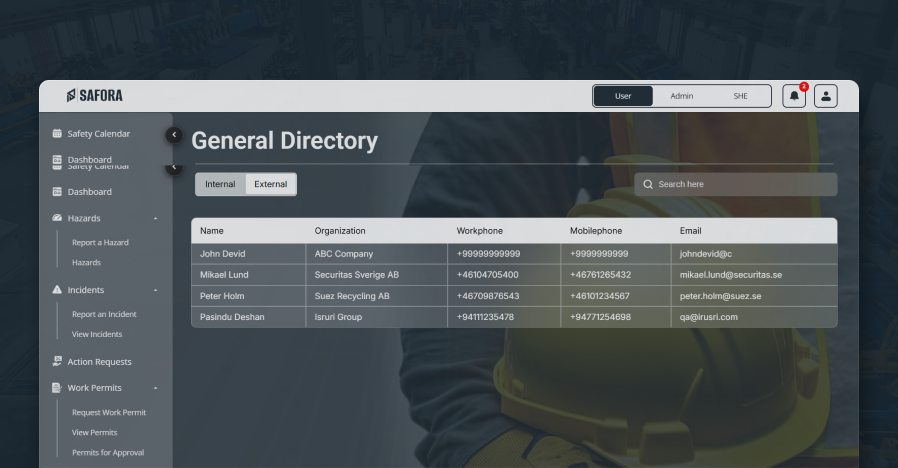
Emergency Contact Directories Instant Access to Critical Contacts When It Matters Most
The Emergency Contact Directory is a centralized and easily accessible directory of key personnel and essential contact information. It ensures that the right people can be reached immediately during incidents, hazards, or facility issues, improving response time and coordination.
What is an Emergency Contact Directory?
An Emergency Contact Directory provides a structured and up-to-date list of important contacts, including names, roles, phone numbers, and alternative communication channels. It replaces scattered contact lists and outdated paper records with a single, reliable digital source.
This ensures that during any emergency or safety-related situation, employees can quickly identify and contact the appropriate response personnel.
Why Emergency Contact Directories Are Important?
In emergency situations, delays in communication can increase risk and severity. Traditional contact lists are often:
- Outdated or incomplete
- Difficult to find during emergencies
- Stored in multiple locations
- Not accessible outside the office
A digital emergency contact directory eliminates these gaps by keeping critical contacts organized, updated, and always available.
Key Features
-
Centralized Emergency Contact Directory
-
Detailed Contact Information
-
Role-Based Categorization
-
Quick Search and Navigation
-
Mobile and Desktop Accessibility
-
Secure and Controlled Access
-
Easy Updating and Maintenance
Benefits of Using SAFORA for Emergency Contact Directories
SAFORA’s Emergency Contact Directories module enables organizations to maintain instant access to critical contacts when it matters most. By centralizing emergency information, organizations can ensure faster response times and better coordination during incidents, improving overall workplace safety.
-
Enables Faster Emergency Response Ensures teams can respond quickly and effectively during emergency situations.
-
Improves Incident Coordination Enhances communication and coordination between teams during emergencies.
-
Reduces Confusion and Delays Provides clear procedures that help teams act quickly without uncertainty.
-
Strengthens Emergency Preparedness Helps organizations stay prepared for potential emergency situations.
-
Increases Employee Confidence Gives employees clear guidance on how to respond safely during incidents.
-
Builds a Stronger Safety Culture Promotes awareness and responsibility for emergency readiness across the organization.