





What is incident reporting?
Incident management is the process of reporting, investigating, and resolving workplace incidents such as injuries, property damage, environmental incidents, and dangerous occurences. It ensures that incidents are properly analyzed to identify root causes and corrective or preventive actions are implemented. Safora digitizes the entire incident management process, making incident reporting, investigation, and tracking faster, easier, and more reliable.
Why Digital Incident Management?
Traditional incident handling methods create gaps and delays:
- Incidents are reported verbally or through informal messages
- Paper forms are incomplete or lost
- Investigations are delayed
- Root causes are not properly identified
- Corrective actions are not tracked
- Management lacks visibility
Safora replaces these fragmented processes with a structured and transparent digital system.
How Incident Management Works in Safora


Report in Seconds
Employees can quickly report incidents through the mobile app, capturing essential details like type, location, and involved personnel.
Automatic Notifications
Once submitted, the system notifies all relevant parties, ensuring immediate awareness for safety teams and supervisors.
Request Investigation
Investigations can be initiated directly from the incident report to determine what happened and why it happened.
Root Cause Analysis
Investigators can perform root cause analysis to identify underlying causes, such as human factors, process failures, or equipment issues, rather than only addressing surface-level problems.
Corrective Actions
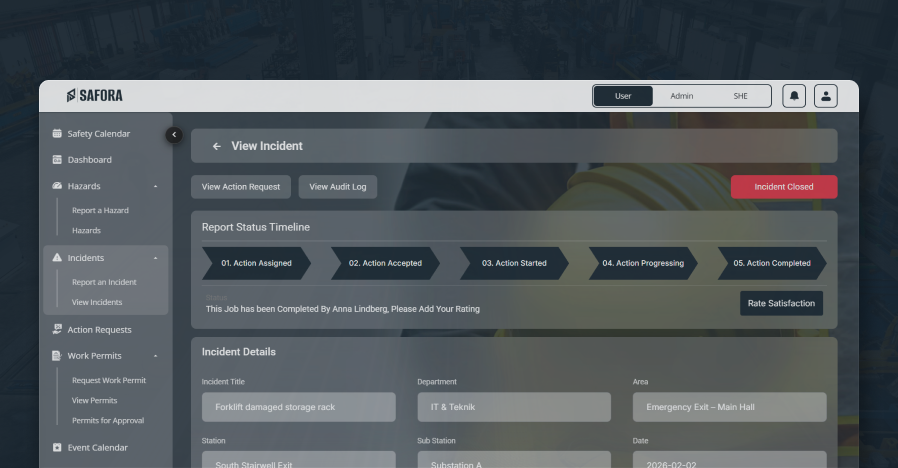
Track corrective actions from assignment to completion, ensuring accountability and preventing recurrence.
Benefits of Using SAFORA for Incident Management
SAFORA's Incident Management module helps organizations respond to incidents quickly, investigate thoroughly, and implement corrective actions to prevent recurrence.
-
Faster Incident Reporting Employees can quickly report incidents with detailed information and photo evidence through a simple digital form.
-
Immediate Safety Notifications Automatic alerts ensure supervisors and safety teams are informed instantly when an incident occurs.
-
Structured Investigation Process A clear digital workflow helps safety teams investigate incidents systematically and efficiently.
-
Accurate Root Cause Identification Root cause analysis tools help organizations identify the real reasons behind incidents, preventing repeat occurrences.
-
Effective Corrective Action Tracking Assign, monitor, and complete corrective and preventive actions to ensure incidents are fully addressed.
-
Complete Incident Visibility Track every incident from reporting to closure with full transparency and accountability.
-
Centralized Incident Records All incident data, investigations, and evidence are stored securely in one place for easy access.
-
Improved Safety Compliance Proper documentation of incidents and actions supports audits, regulatory compliance, and safety reporting.
-
Reduced Workplace Risks Learning from incidents helps organizations strengthen safety practices and prevent future accidents.
-
Reduced Workplace Risks Learning from incidents helps organizations strengthen safety practices and prevent future accidents.