





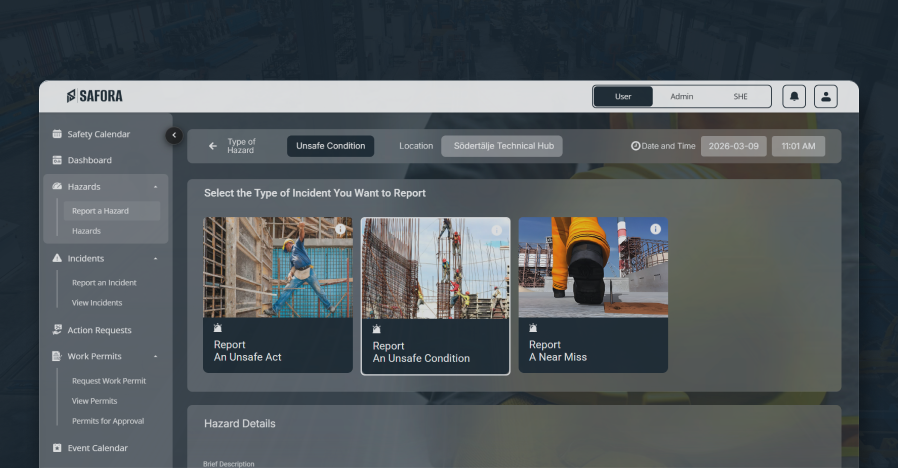
What is hazard reporting?
Hazard management is the process of identifying potential dangers in the workplace, including unsafe acts, unsafe conditions, and near misses, assessing their risk level, and taking corrective or preventive actions to eliminate or control them. Safora digitizes this entire process, making hazard reporting and tracking faster, easier, and more reliable. Provides a digital hazard reporting system that replaces paper forms and informal messages with a structured, trackable reporting method.
How Hazard Reporting Works in Safora


Report in Seconds
Employees can submit hazard reports through the app on their smartphones or tablets, including location details and hazard type.
Add Evidence
Upload photos, videos, or documents to provide detailed evidence of potential workplace hazards.
Instant Notifications
Relevant personnel receive immediate alerts ensuring rapid response to critical hazards.
Request Investigation
Hazards can trigger detailed investigations to understand root causes and prevent recurrence.
Action Tracking
Monitor corrective actions from initiation to completion with real-time status updates and accountability.
Benefits of Using SAFORA for Hazard Management
Safora's Hazard Management module helps organizations identify, report, and control workplace hazards in real time, reducing risks before accidents happen.
-
Early Risk Identification Detect unsafe acts, unsafe conditions, and near misses before they lead to accidents.
-
Faster Hazard Reporting Employees can report hazards instantly using a simple digital form from any location.
-
Improved Workplace Safety Address potential risks quickly through timely corrective and preventive actions.
-
Real-Time Safety Awareness Automatic notifications ensure safety teams are informed immediately when hazards are reported.
-
Better Evidence and Documentation Photo attachments and detailed reports provide clear visibility into hazard conditions.
-
Efficient Investigation Process Initiate investigations directly from hazard reports to identify root causes.
-
Action Tracking Until Resolution Monitor corrective actions and ensure hazards are properly resolved and closed.
-
Centralized Hazard Records Maintain a complete digital history of hazards, investigations, and actions in one system.
-
Stronger Safety Culture Encourages employees to actively participate in identifying and reporting workplace risks.